Resources · Infographic
The Cost of Poor Wound Care Documentation
The hidden financial, time, and compliance costs of documentation errors in wound care practices.


The hidden financial, time, and compliance costs of documentation errors in wound care practices.
National denial rate for advanced wound care claims
Annual provider losses from denied claims
of nursing time spent on documentation
Admin time reduction with V3 Biomedical
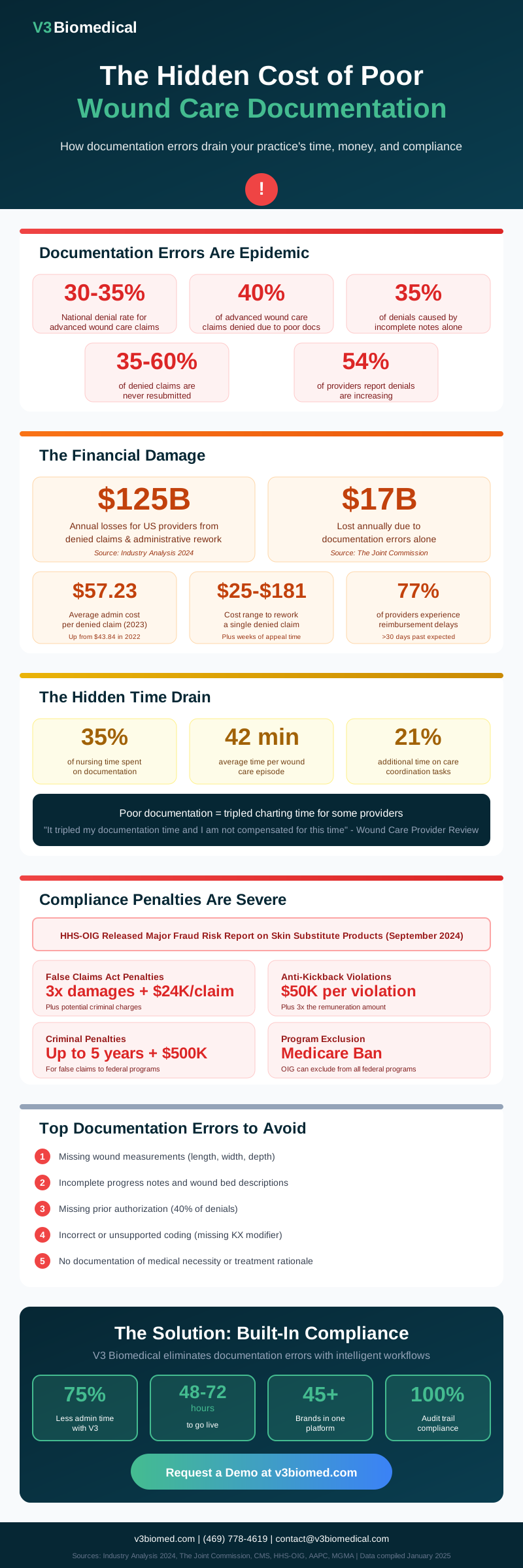
Roughly 30–35% of advanced wound care claims are denied, most often because the supporting documentation is incomplete, inconsistent, or missing the elements payers require. Across the industry, those preventable denials add up to an estimated $125 billion in annual provider losses — revenue tied to care that was actually delivered but could not be defended on paper.
Documentation is also a drain on clinical capacity. About 35% of nursing time goes to documentation rather than direct patient care. In wound care specifically, repetitive charting, duplicate data entry across disconnected systems, and manual product tracking all compound that burden.
Beyond lost revenue, weak documentation exposes practices to audit findings, clawbacks, and payer scrutiny. Missing wound measurements, absent medical-necessity justification, and gaps between product utilization and the clinical record are among the most common reasons advanced wound care claims fail review.
V3 Biomedical's built-in compliance workflows and documentation checkpoints are designed to catch missing elements before a claim goes out, keeping practices audit-ready. Practices using V3 can reduce administrative time by up to 75%, freeing clinicians to spend more of their day on patient care.
Bring your current stack, your brands, and your billing posture. We will show you exactly what V3 takes off your team's plate.